Why Is My Car Overheating? Causes and What to Do
Temperature gauge climbing or a red warning light? A Cranbourne West workshop explains what to do the moment your car overheats, the common causes, and why you should never drive on.
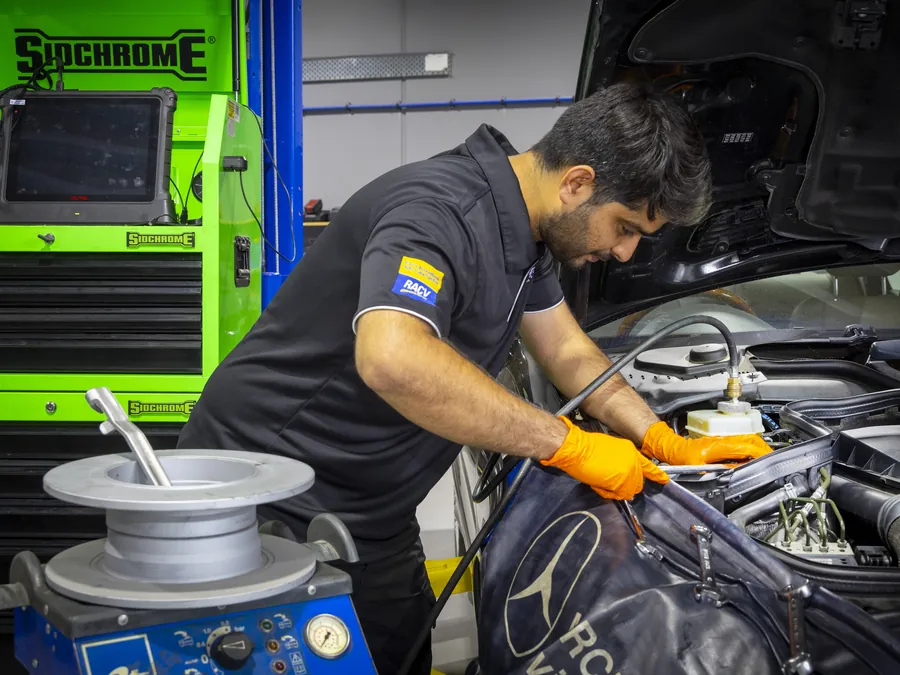
Want the fault found properly? Find the fault: $374 diagnostic, Cranbourne West
Overheating is serious – here’s what’s at stake
Of all the warning signs a car gives, overheating is one of the few that means stop now. Modern engines run to fine tolerances, and excess heat can warp the cylinder head, blow the head gasket, or seize the engine entirely – turning a cheap fix into a very expensive one in minutes. The good news is that overheating usually has a clear, fixable cause, and acting quickly almost always limits the damage. Here is what to do the moment it happens, and the common reasons engines overheat.
What to do the moment it overheats
If the temperature gauge climbs into the red or a red coolant light comes on: turn off the air-con and turn the heater to hot (it draws heat away from the engine), and safely pull over and switch the engine off as soon as you can. Do not keep driving to ‘get home’. Crucially, do not open the radiator or coolant cap while the engine is hot – the system is pressurised and scalding coolant can spray out. Let it cool, then call us or arrange for the car to be checked rather than risking more damage.
Cause: low coolant or a leak
The most common cause is simply not enough coolant, usually because of a leak. Coolant can escape from hoses, the radiator, the water pump, a gasket, or the expansion tank – sometimes visibly (a puddle, steam, a sweet smell), sometimes slowly over weeks. Topping up gets you going briefly, but the coolant left for a reason, so the leak needs finding and fixing. We pressure-test the cooling system to locate exactly where it is escaping rather than guessing or just refilling it.
Cause: a failed thermostat
The thermostat regulates coolant flow to keep the engine at the right temperature. If it sticks closed, coolant cannot circulate to the radiator and the engine overheats quickly – even with plenty of coolant. A thermostat is a relatively inexpensive part, but a stuck one can cause serious overheating, so it is a common and important thing to check. Conversely a thermostat stuck open makes the engine run cold and never reach temperature. We test it as part of diagnosing an overheating fault.
Cause: the water pump
The water pump circulates coolant through the engine and radiator. When it fails – worn bearings, a damaged impeller, or a leak – circulation drops and the engine overheats. A failing pump may whine, leak, or wobble. On many engines the pump is driven by the timing belt, so it is often replaced together with the belt. An overheating engine with a noisy or leaking front end points strongly at the pump. We check it directly rather than assuming.
Cause: radiator or cooling fan
The radiator sheds the engine’s heat to the air; the cooling fan pulls air through it at low speed and when stationary. A radiator that is blocked (internally with old coolant deposits, or externally with debris) cannot shed heat properly. A fan that has failed means the car overheats in traffic but is fine at highway speed (where airflow does the job). Both are common and diagnosable. If your car overheats only when crawling in traffic, the fan is a prime suspect.
Cause: the head gasket (the serious one)
The head gasket seals the join between the engine block and cylinder head, keeping coolant and combustion separate. If it fails, coolant and combustion gases mix – causing overheating, white exhaust smoke, coolant loss with no visible leak, or a milky residue on the oil cap. A head gasket failure is the serious end of overheating, and ironically it is often caused by a previous overheat from one of the simpler faults above. That is exactly why you never drive on an overheating engine – a $100 hose can become a head-gasket job.
Cause: old or wrong coolant
Coolant is not ‘fill and forget’. Over years it loses its corrosion inhibitors and can turn acidic, causing internal corrosion and blockages that reduce cooling and damage the pump and radiator. Using the wrong coolant, or plain water, accelerates this. Many overheating problems trace back to coolant that was never changed. Replacing it on schedule with the correct type for your car is cheap insurance. We use the right coolant and flush the system properly when it is due.
Why European cars and cooling need care
Many European cars use plastic cooling components – housings, tanks, impellers – that become brittle with age and can fail suddenly, and their engines are particularly intolerant of overheating. This is one reason European cars benefit from a specialist who knows to refresh known-weak cooling parts proactively. If you drive a Mercedes, BMW, Audi or VW, the cooling system is worth keeping an eye on before it leaves you stranded – prevention here is far cheaper than the cure.
How we diagnose and fix overheating
Rather than just refilling coolant, we pressure-test the system to find leaks, check the thermostat, water pump, radiator and fan, and look for any sign of head-gasket trouble – then quote the fix in writing. If your car is overheating, do not keep driving it; let it cool and get it to us. We are your RACV-accredited Cranbourne West workshop. Book online or call 03 8782 0711.
Need a hand from a real mechanic?
StarTech Prestige is your RACV-accredited Cranbourne West specialist. Book online or call 03 8782 0711.
Book Online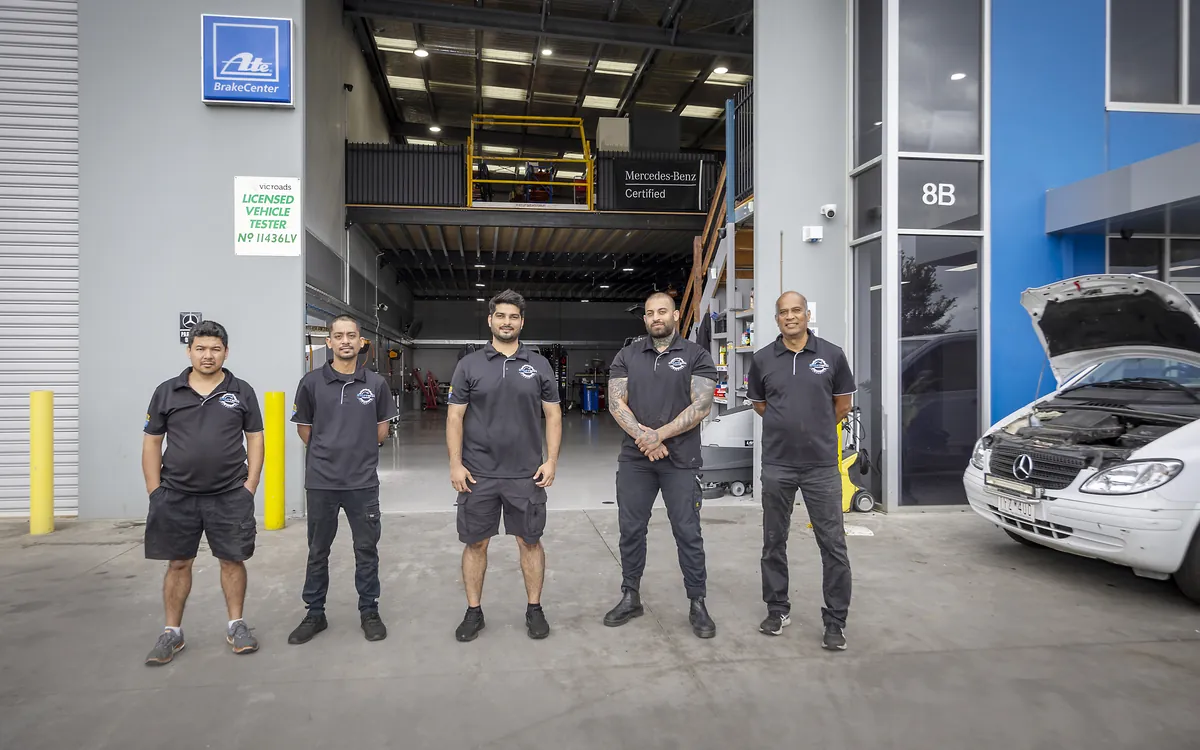
Patrick, Leon & the StarTech Prestige team
A father-and-son workshop — founded by Patrick (40+ years in the trade) and run by his son Leon, servicing Mercedes-Benz and European cars in Cranbourne West for 22+ years. StarTech Prestige is RACV-Accredited, VACC A-Grade and ARCtick licensed — backed by real Google reviews.
Why Is My Car Overheating? Causes and What to Do — FAQ
Turn off the air-con, turn the heater to hot, and safely pull over and switch off as soon as you can. Don’t keep driving, and never open the coolant cap while hot. Let it cool and get it checked.
Most often low coolant or a leak, a stuck thermostat, a failing water pump, a blocked radiator or failed cooling fan – or, more seriously, a head gasket. We pressure-test to find the real cause.
No. Continuing to drive can warp the head, blow the head gasket or seize the engine – turning a cheap fix into a major repair. Stop, let it cool, and have it checked.
That points to the cooling fan – it pulls air through the radiator when you’re stationary or slow. At highway speed airflow does the job, so it stays cool. A failed fan is a common, fixable cause.
Book online in 60 seconds — done.
Fixed written pricing, RACV-accredited and warranty-safe. Pick a time that suits you and you’re done — trusted by Cranbourne West drivers.
Talk to a real mechanic
No waiting on quotes — lock in your spot in 60 seconds. Fixed written pricing confirmed before any work.
Book Online →Call 03 8782 07118B Universal Way, Cranbourne West VIC 3977 · Mon-Fri 8:30am-5:30pm
More guides like this
Questions about your car?
Talk to a real Cranbourne West mechanic. Call 03 8782 0711 or book online.