Car Battery Warning Signs: When to Replace It
Slow cranking, dim lights or needing jump-starts? A Cranbourne West workshop explains the warning signs a car battery is dying, how long batteries last, and why European cars need the battery registered.
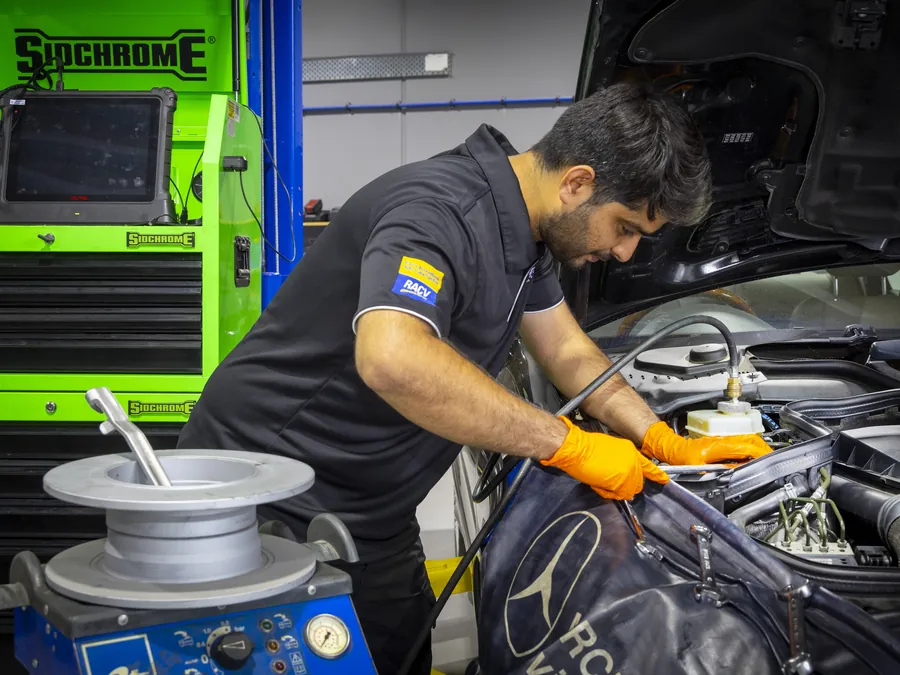
Electrical fault? Auto Electrical Cranbourne West
How long does a car battery actually last?
Most car batteries last around three to five years, but the real number depends heavily on how and where you drive. Lots of short trips never fully recharge a battery; extreme heat (Melbourne summers) cooks it; and long periods parked drain it. The frustrating thing about batteries is that they often fail suddenly – fine yesterday, dead this morning – but they usually drop hints first. Knowing the warning signs lets you replace a tired battery on your terms, in the driveway, instead of stranded in a car park. Here is what to watch for.
Sign 1: slow or laboured cranking
The classic early warning is the engine cranking slowly or sluggishly when you start it – that drawn-out ‘rrr-rrr-rrr’ instead of a quick, eager start. It means the battery is struggling to deliver the current the starter needs. It is often most obvious on the first cold start of the day. If your car has started to sound lazy turning over, the battery is telling you it is on the way out. Get it tested before it fails completely – slow cranking rarely improves on its own.
Sign 2: dim lights and electrical gremlins
A weakening battery shows up in the electrics. Headlights that look dim at idle but brighten as you rev, interior lights that fade, a slow power-window, or a flickering dash can all point to a battery (or charging) that is not keeping up. Modern cars are full of electronics that need stable voltage, so a tired battery can trigger odd, intermittent faults that seem unrelated. If several small electrical niggles appear together, have the battery and charging system tested before chasing each symptom separately.
Sign 3: the battery / charging warning light
If the battery-shaped warning light comes on, do not ignore it – it usually means the charging system is not keeping the battery topped up (often the alternator), or the battery itself is failing. Driving with it on means you are running down the reserve, and the car will eventually stop. It is worth getting checked promptly so we can tell whether it is the battery, the alternator or the drive belt – replacing the wrong one is a common and avoidable expense.
Sign 4: needing jump-starts
If you have had to jump-start the car, that is not a fix – it is a clear signal. A battery that goes flat once may have been left with something on, but a battery that needs jumping repeatedly is failing or not being charged. Each deep discharge also shortens its remaining life. Rather than carrying jumper leads and hoping, get the battery and charging system tested so you know whether it needs replacing or whether something is draining or under-charging it.
Sign 5: a swollen case, corrosion or a smell
A quick look under the bonnet can reveal a lot. A battery case that looks swollen or bloated has usually been damaged by heat or overcharging and needs replacing. Heavy white or green corrosion on the terminals interferes with the connection and can mimic a flat battery. And a rotten-egg (sulphur) smell can indicate a leaking or overheating battery – that one needs attention promptly. If your battery looks or smells unhealthy, do not wait for it to leave you stranded.
Why cold mornings and short trips kill batteries
Two everyday things are hard on batteries. Cold reduces a battery’s available power while making the engine harder to turn over – so a battery that was ‘just coping’ often dies on the first cold snap. And short trips do not give the alternator time to fully recharge what starting used, so the battery slowly runs down over weeks of school-run driving. If your driving is mostly short hops, your battery works harder than average – and an occasional longer run or a proper charge helps it live longer.
Battery or alternator – which is it?
This is the question worth answering before you spend money. A simple guide: if the car starts fine after a recharge or a new battery and then goes flat again, the alternator (charging) is the likely culprit. If the battery holds its charge once recharged and the car runs fine, the battery itself was the issue. Because guessing here is expensive, we test both the battery’s condition and the charging output, so you replace the part that has actually failed – not both. See our car-won’t-start guide.
Why European cars need the battery ‘registered’
Here is something many owners (and some workshops) miss: on many modern European cars – BMW, Mercedes, Audi, VW – a new battery must be electronically registered or coded to the car. The charging system adapts to the battery’s age, and fitting a fresh battery without registering it means the car keeps charging it as if it were old, shortening its life and causing faults. We have the equipment to register the battery properly, so a European-car battery replacement actually lasts as it should.
Get your battery tested – it is quick
A battery and charging test takes only minutes and tells you exactly where you stand – plenty of life left, or time to replace. We test the battery’s health and the alternator’s output, fit a quality battery suited to your car, and register it correctly on European models. Far better to know now than to be caught out on a cold morning. We are your Cranbourne West workshop – book online or call 03 8782 0711.
Need a hand from a real mechanic?
StarTech Prestige is your RACV-accredited Cranbourne West specialist. Book online or call 03 8782 0711.
Book Online
Patrick, Leon & the StarTech Prestige team
A father-and-son workshop — founded by Patrick (40+ years in the trade) and run by his son Leon, servicing Mercedes-Benz and European cars in Cranbourne West for 22+ years. StarTech Prestige is RACV-Accredited, VACC A-Grade and ARCtick licensed — backed by real Google reviews.
Car Battery Warning Signs: When to Replace It — FAQ
Typically three to five years, but short trips, extreme heat and long periods parked shorten that. The best guide isn’t age alone – it’s a quick battery and charging test.
Slow or laboured cranking, dim lights and small electrical faults, the battery warning light, needing jump-starts, and a swollen case or corroded terminals. Any of these means get it tested.
If it goes flat again after a recharge or new battery, the alternator is the likely cause; if it holds charge once recharged, it’s the battery. We test both so you replace the right part.
Yes – many BMW, Mercedes, Audi and VW models need a new battery electronically registered to the car, or it won’t charge correctly and won’t last. We register it properly.
Book online in 60 seconds — done.
Fixed written pricing, RACV-accredited and warranty-safe. Pick a time that suits you and you’re done — trusted by Cranbourne West drivers.
Talk to a real mechanic
No waiting on quotes — lock in your spot in 60 seconds. Fixed written pricing confirmed before any work.
Book Online →Call 03 8782 07118B Universal Way, Cranbourne West VIC 3977 · Mon-Fri 8:30am-5:30pm
Related guides & services
More guides like this
Questions about your car?
Talk to a real Cranbourne West mechanic. Call 03 8782 0711 or book online.