What’s Checked in a Roadworthy (RWC) in Victoria?
A Victorian roadworthy inspection covers the safety-critical items that keep a car legal to drive — brakes, tyres, steering, lights and more. At StarTech Prestige in Cranbourne West a roadworthy certificate is $330 incl. GST, flat, for petrol and diesel vehicles (EV and hybrid RWCs can’t currently be issued here). A licensed tester takes you through every item below, plus what happens if your car fails.
What a roadworthy certificate actually is
A roadworthy certificate (RWC) is a safety inspection required in Victoria when you sell a registered vehicle, re-register one, or transfer registration in certain cases. It is not a comprehensive mechanical check or a guarantee the car is fault-free – it is a defined safety inspection against VicRoads standards, carried out by a licensed tester. It confirms the key safety systems meet the minimum legal standard on the day. Knowing what is (and is not) checked helps you prepare your car and avoid surprises. Here is what a licensed tester goes through.
Brakes
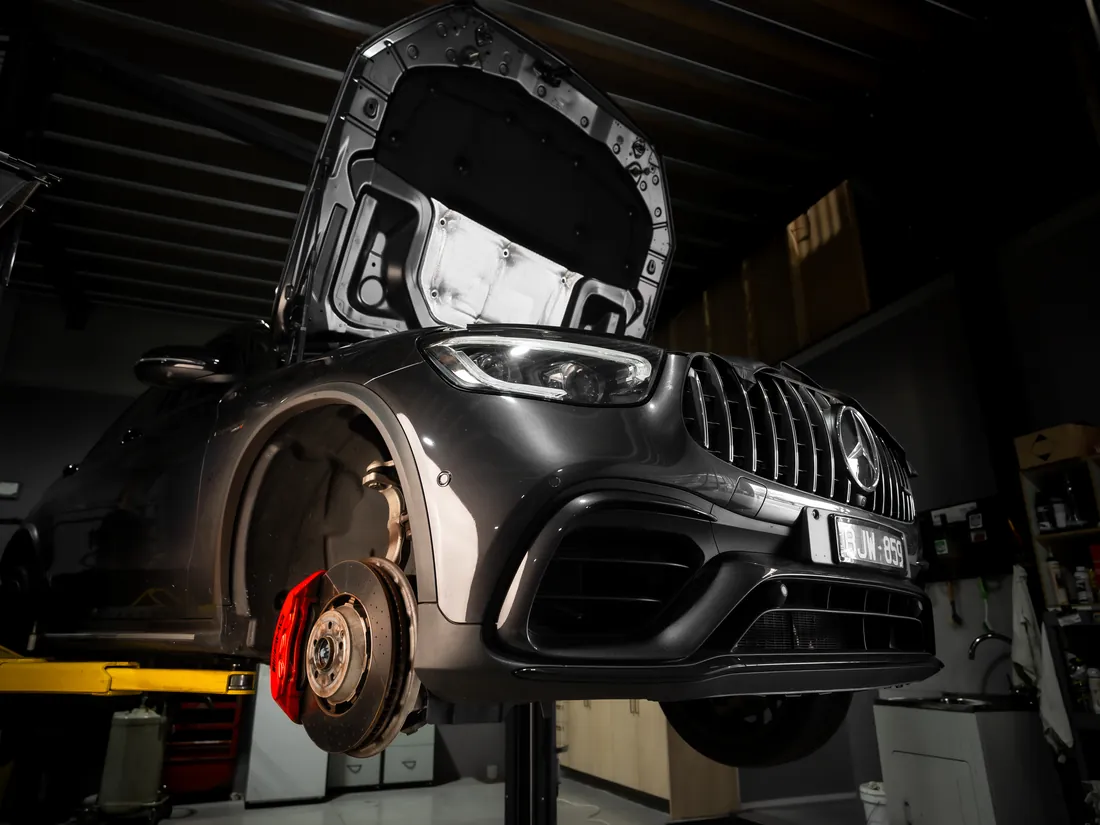
Brakes are central to any roadworthy. The tester checks pad and rotor wear, that the brakes work evenly without pulling to one side, the condition of brake lines and hoses, the park brake’s operation, and that there are no leaks or excessive play. Worn pads, warped rotors, a brake that pulls, or a weak handbrake will all fail. Because brakes are both the most safety-critical item and a common failure point, it is the first thing we look at – and something we can repair and re-test in the same visit. See our brake repairs service.
Tyres and wheels
Tyres are checked for tread depth (they must be above the legal minimum across the tyre), for damage like cuts, bulges or perishing, and that they are a suitable type and size for the vehicle. Mismatched or unsuitable tyres can fail. The wheels are checked for damage and that they are properly secured. Tyres are one of the easiest things to get sorted before a test – if any are near the limit, replacing them beforehand saves a re-inspection.
Steering and suspension
The tester inspects steering and suspension for wear and play – tie-rod ends, ball joints, bushes, shock absorbers and wheel bearings – and that nothing is leaking, loose or damaged. Excessive play in a joint, a leaking shock, or worn components affect how the car handles and stops, so they are roadworthy items. Clunks, vague steering or a bouncy ride are signs these may need attention. See our suspension and steering service if you suspect wear before testing.
Seatbelts and restraints
Every seatbelt is checked to confirm it operates correctly, latches and retracts properly, and is not frayed, cut or damaged. The mountings are checked too. Seatbelts are a core safety item, so a belt that does not retract, will not latch securely, or is damaged will fail the inspection. They are easy to overlook because they usually ‘just work’ – but it is worth checking each one buckles and pulls smoothly before a test.
Lights and indicators
All exterior lights are checked: headlights (including high beam and correct aim), tail-lights, brake lights, indicators, hazard lights, reverse lights and number-plate lights. They must work, be the correct colour, and be securely fitted. A blown bulb is one of the most common – and most easily avoided – reasons a car fails, so walk around the car and check every light beforehand. Cracked or missing lenses can also be an issue.
Windscreen and wipers
The windscreen is checked for cracks or chips in the driver’s line of sight that could obscure vision, and the wipers and washers must work effectively to keep the screen clear. A chip directly in the driver’s view, or wipers that smear rather than clear, can fail. A small chip outside the critical area may be acceptable, but anything affecting the driver’s vision needs attention. It is worth getting a borderline windscreen assessed before the test.
Body, structure and rust
The tester checks the body and structure for damage and, importantly, for rust or corrosion in structural areas – rust that affects the vehicle’s strength or safety is a fail. Sharp edges, insecure panels or anything likely to be dangerous are also noted. Surface rust on a non-structural panel is usually fine; structural rust is not. On older cars this is one of the more involved checks, and significant structural rust can be a bigger repair to rectify.
Exhaust, leaks and general condition
The exhaust system is checked for leaks, security and excessive noise, and the car is checked for significant oil or fluid leaks. Other general safety items – the condition of the driver’s seat and its mounting, the operation of doors and the bonnet latch, and so on – are also covered. None of these are exotic, but a blowing exhaust or a notable leak can fail, so it is worth fixing obvious issues before presenting the car.
What happens if your car fails?
If a car does not pass, you receive a written list of exactly what failed and why – there is no mystery. In Victoria you generally have a set period to have the items repaired and the car re-checked. The advantage of testing where the work can also be done is convenience: we give you a clear quote for the failed items, fix them, and re-inspect, so you leave with the certificate rather than driving around to multiple places. We can repair almost anything a roadworthy throws up.
Book your roadworthy in Cranbourne West
We are licensed Victorian roadworthy testers, and our RWC service is fixed-priced at $330, flat for every petrol or diesel vehicle. We can inspect, give you a clear written report, repair any failed items, and re-test – often the same day. For more on when you need one, see our do-I-need-a-roadworthy guide. See Roadworthy Cranbourne West — $330 for the full service page. Book online or call 03 8782 0711.
Need a hand from a real mechanic?
StarTech Prestige is your RACV-accredited Cranbourne West specialist. Book online or call 03 8782 0711.
Book Online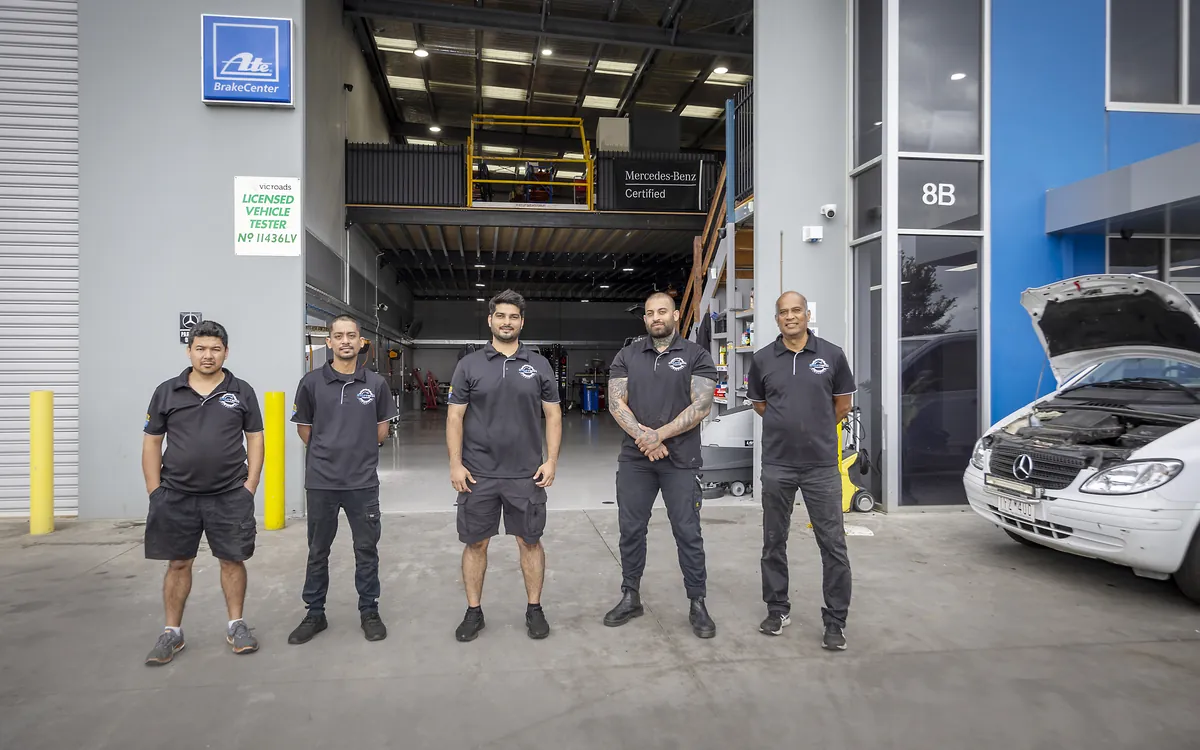
Patrick, Leon & the StarTech Prestige team
A father-and-son workshop — founded by Patrick (40+ years in the trade) and run by his son Leon, servicing Mercedes-Benz and European cars in Cranbourne West for 22+ years. StarTech Prestige is RACV-Accredited, VACC A-Grade and ARCtick licensed — backed by real Google reviews.
Book a roadworthy — $330 incl. GST
Pick a day below and we’ll confirm your exact time by SMS. Fixed written pricing before any work.
What’s Checked in a Roadworthy (RWC) in Victoria? — FAQ
Brakes, tyres and wheels, steering and suspension, seatbelts, lights and indicators, the windscreen and wipers, body and structural rust, and the exhaust and major leaks – all against VicRoads safety standards by a licensed tester.
No. It’s a defined safety inspection, not a comprehensive health check or a guarantee the car is fault-free. For peace of mind when buying, a pre-purchase inspection is the better tool.
Our RWC is fixed at $330, flat for every petrol or diesel vehicle. If anything fails, we give you a clear written quote to repair it and then re-test.
You get a written list of the failed items. You then have them repaired and the car re-checked. Because we can do the repairs too, we quote, fix and re-test – often the same day – so you leave with the certificate.
Book online in 60 seconds — done.
Fixed written pricing, RACV-accredited and warranty-safe. Pick a time that suits you and you’re done — trusted by Cranbourne West drivers.
Talk to a real mechanic
No waiting on quotes — lock in your spot in 60 seconds. Fixed written pricing confirmed before any work.
Book Online →Call 03 8782 07118B Universal Way, Cranbourne West VIC 3977 · Mon-Fri 8:30am-5:30pm
More guides like this
Questions about your car?
Talk to a real Cranbourne West mechanic. Call 03 8782 0711 or book online.