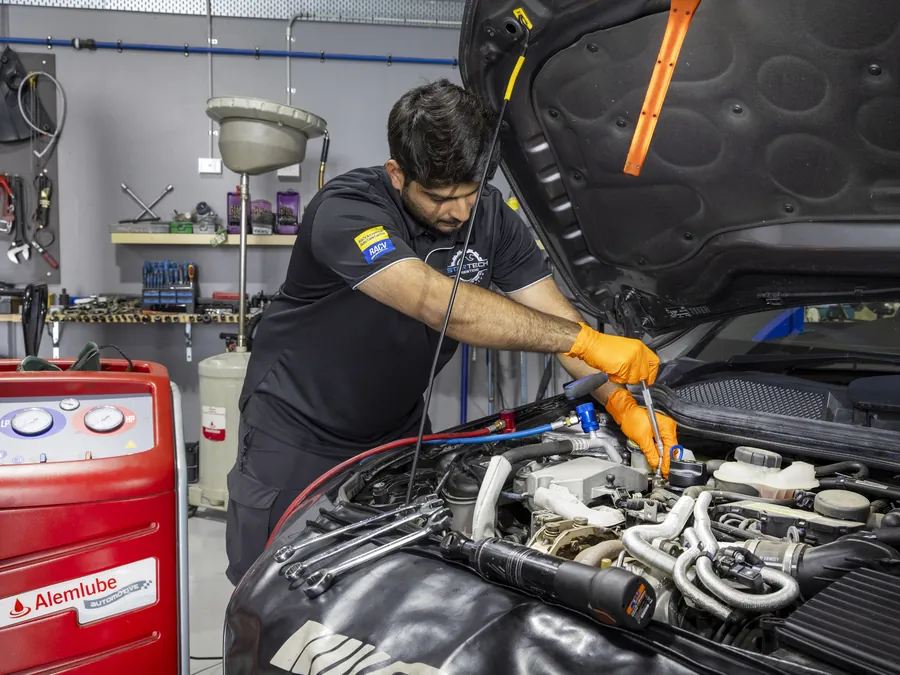
What Does a Catalytic Converter Do?
The catalytic converter cleans your exhaust — and is an expensive part to replace. A Cranbourne West specialist explains.
Want the fault found properly? Find the fault: $374 diagnostic, Cranbourne West
What it is & what it does
A catalytic converter sits in the exhaust and uses precious-metal catalysts to convert harmful gases (carbon monoxide, unburnt fuel, NOx) into less harmful ones. It’s essential for emissions and required to pass a roadworthy.
It works alongside the oxygen sensors that monitor the exhaust and help the engine run cleanly.
Signs of trouble & how we help
A cat usually fails because of another fault — a misfire, oil burning or rich running — that overheats or contaminates it. Signs include a check-engine light, rotten-egg smell, power loss or a rattle (a broken internal honeycomb).
We diagnose whether it’s really the cat or just a sensor, fix the underlying cause, and only replace the converter if it’s genuinely failed.
Questions about your car? Just ask.
Understanding what’s under the bonnet makes servicing decisions easier — and we’re always happy to explain what your car needs and why, in plain English.
Book a service or a check with a Cranbourne West specialist online in 60 seconds, or call 03 8782 0711.
What Does a Catalytic Converter Do? — FAQ
It converts harmful exhaust gases into less harmful ones — essential for emissions and a roadworthy.
Usually because of another fault (misfire, oil burning, rich running) that overheats or contaminates them.
A check-engine light, rotten-egg smell, power loss, or a rattle from a broken internal honeycomb.
No — often it’s a sensor. We confirm before replacing an expensive part.
Related guides & services
More guides like this
Need yours checked?
Book your car in online in 60 seconds — RACV-accredited, fixed written pricing, no surprises. Or call 03 8782 0711.
Book it in
Pick a day below and we’ll confirm your exact time by SMS. Fixed written pricing before any work.