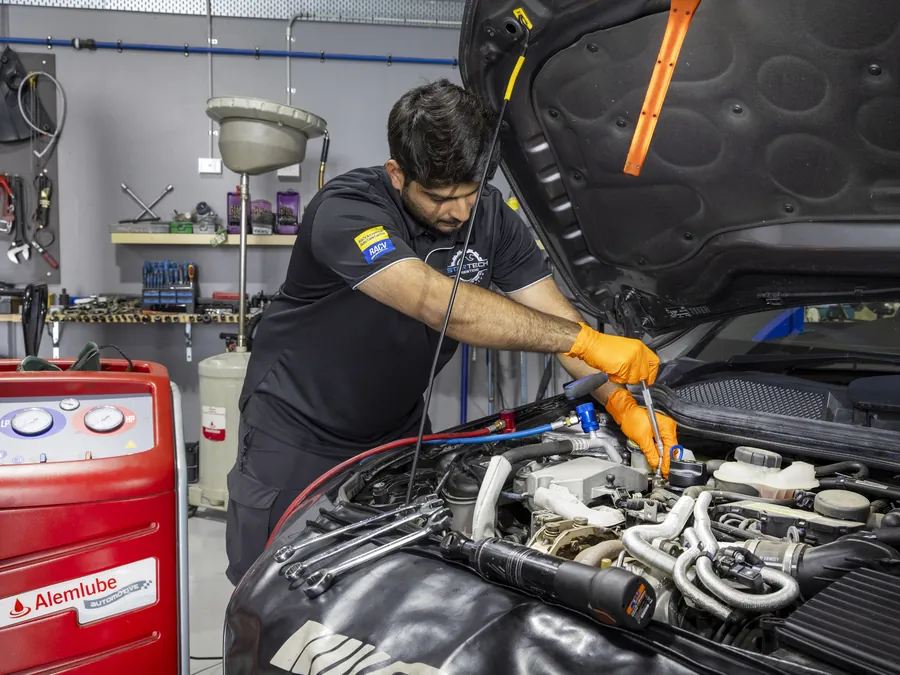
Engine Revs High When Cold: Normal or Not?
That 1,500rpm fast idle on winter mornings worries owners unnecessarily — mostly. A Cranbourne West specialist explains.
What it usually means
A cold engine deliberately idles fast — typically 1,200–1,500 rpm — to warm itself and (crucially) light off the catalytic converter quickly, settling to normal within a couple of minutes as temperature rises. That’s programming, not a problem. The fault versions: fast idle that never settles when warm, revs that hunt up and down, or a cold idle so high the car lunges in gear.
A stuck-open thermostat creates a sneaky variant: the engine never properly warms, so the “cold” idle lingers — with poor heater output as the companion clue.
What you should do
Learn your car’s normal settle time; a change in the pattern is the message. Persistent high idle when warm points at coolant-temp sensing, a vacuum leak or the thermostat.
We read the temperature the ECU believes against reality, and check the idle-control chain when the pattern says fault.
How we find & fix it
Because the same symptom can have several causes, we use dealer-level diagnostics and a methodical check to pinpoint the real cause — rather than throwing parts at it.
You get a clear explanation and a fixed written quote before any work. Book online in 60 seconds or call 03 8782 0711.
Engine Revs High When Cold: Normal or Not? — FAQ
Deliberate fast idle — warming the engine and lighting the catalytic converter quickly. It should settle within minutes.
If it never settles when warm, hunts up and down, or is high enough that the car lunges in gear.
A stuck-open thermostat keeps the engine cold — both symptoms share the cause.
Gently, yes — driving warms it faster than idling. Just avoid hard throttle until temperature arrives.
Related guides & services
More guides like this
Car doing something odd?
Book your car in online in 60 seconds — RACV-accredited, fixed written pricing, no surprises. Or call 03 8782 0711.