DSG Transmission Problems: Symptoms, Causes & Fixes
Jerky shifts, shuddering or a gearbox warning light on your VW, Audi, Skoda or SEAT? A Cranbourne West specialist explains common DSG problems, why fluid services matter, and when to repair vs replace.
What a DSG actually is
A DSG (Direct-Shift Gearbox) is the dual-clutch automatic used across Volkswagen, Audi, Skoda and SEAT, and similar dual-clutch units appear on other makes. Think of it as two manual gearboxes in one housing, each with its own clutch – one handles the odd gears, the other the even gears – so the next gear is pre-selected and engaged in milliseconds. That is why a healthy DSG feels so crisp and quick. But that cleverness comes with more moving parts than a traditional automatic: two clutches, a mechatronic control unit, and fluid that does real work. When a DSG plays up, it usually announces itself – here is what to listen and feel for.
Symptom: jerky or hesitant low-speed shifts
The most common DSG complaint is jerkiness at low speed – a lurch pulling away, hesitation in stop-start traffic, or a clunk when the box can’t decide between first and second. Some low-speed firmness is normal for a dual-clutch, because unlike a torque-converter auto it physically engages a clutch rather than slipping smoothly. But genuine jerkiness, surging or a delay before drive engages often points to worn clutches, tired fluid, or a mechatronic unit whose adaptions have drifted. The first, cheapest step is almost always a proper fluid and filter service – it resolves more low-speed complaints than people expect.
Symptom: shuddering or juddering on take-off
A shudder through the car as you accelerate from a standstill – like a gentle vibration or the car ‘stuttering’ – usually points to the clutch pack, particularly on wet-clutch DSGs where the clutches run in fluid. Contaminated or overdue fluid is a frequent cause, and on higher-mileage cars the clutch friction surfaces themselves wear. Catch it early and a fluid service may settle it; leave it and you are looking at clutch replacement. Either way, shuddering on take-off is the box telling you it needs attention before the wear accelerates.
Symptom: a gearbox warning light or limp mode
If a gearbox warning appears, or the car drops into ‘limp’ mode – stuck in one gear, refusing to shift, or flashing the gear display – the DSG’s control system has detected a fault and protected itself. Causes range from a failing mechatronic unit or speed sensor to low fluid pressure or an electrical fault. Do not just clear the light and hope: the box went into limp mode for a reason. We read the transmission with brand-level diagnostics to see the exact stored fault, rather than guessing, so the repair targets the real cause.
Symptom: whining, grinding or unusual noises
New noises from the transmission are worth investigating. A whine that rises with speed, a grinding under load, or a rattle at idle can indicate bearing wear, low fluid, or internal mechanical wear. Noises rarely fix themselves and usually get louder as the underlying wear progresses. The sooner it is diagnosed, the more likely it is a smaller, cheaper fix – so it is worth booking a check rather than turning up the radio.
The mechatronic unit, explained
The mechatronic unit is the DSG’s brain and muscle combined – a module that houses the valve body, hydraulics, sensors and control electronics that actually select and engage gears. When it fails or develops a fault, you get erratic shifting, harsh engagement, warning lights or limp mode. It is a known weak point on some DSG generations. Sometimes a mechatronic fault can be repaired or its software/adaptions reset; sometimes the unit needs replacing. The only way to know is to diagnose it properly – which is exactly the kind of fault we chase rather than parts-swap blindly.
Why DSG fluid services matter (and the interval)
Here is the single most important DSG fact: most wet-clutch DSGs need their fluid and filter changed periodically – commonly around every 60,000 km – and skipping it is the number-one cause of premature DSG trouble. The fluid lubricates the clutches, operates the hydraulics and carries away wear material; when it degrades, shifting suffers and the clutches and mechatronic unit wear faster. Many owners never realise this service exists because the car doesn’t shout about it. A timely DSG fluid service is cheap insurance against a very expensive repair.
Wet-clutch vs dry-clutch DSG
Not all DSGs are the same. Wet-clutch versions (typically on higher-torque engines) run the clutches in fluid and need periodic fluid services. Dry-clutch versions (often on smaller engines) run the clutches without that fluid bath and have a different maintenance and failure pattern – their mechatronic units use a separate fluid. Knowing which one your car has changes both the service schedule and the likely cause of a symptom. When you book in, we identify your exact transmission and treat it accordingly rather than applying a one-size guess.
Repair or replace? What we actually recommend
The right call depends on the fault, the mileage and the car. A fluid service or a mechatronic repair/reset can bring many DSGs back to health for a sensible spend. Worn clutch packs can be replaced without renewing the whole gearbox. A full transmission replacement is the last resort, not the opening offer – and we will never push you toward one without confirming it is genuinely needed. We diagnose first, explain what we found in plain English, and quote your options in writing so you can choose.
Get your DSG checked in Cranbourne West
If your VW, Audi, Skoda or SEAT is shifting strangely, shuddering, or showing a gearbox light, book it in before the wear compounds. We diagnose dual-clutch transmissions with brand-level tools and handle fluid services, mechatronic diagnostics and clutch work – all with fixed written pricing. Book online or call 03 8782 0711.
Need a hand from a real mechanic?
StarTech Prestige is your RACV-accredited Cranbourne West specialist. Book online or call 03 8782 0711.
Book Online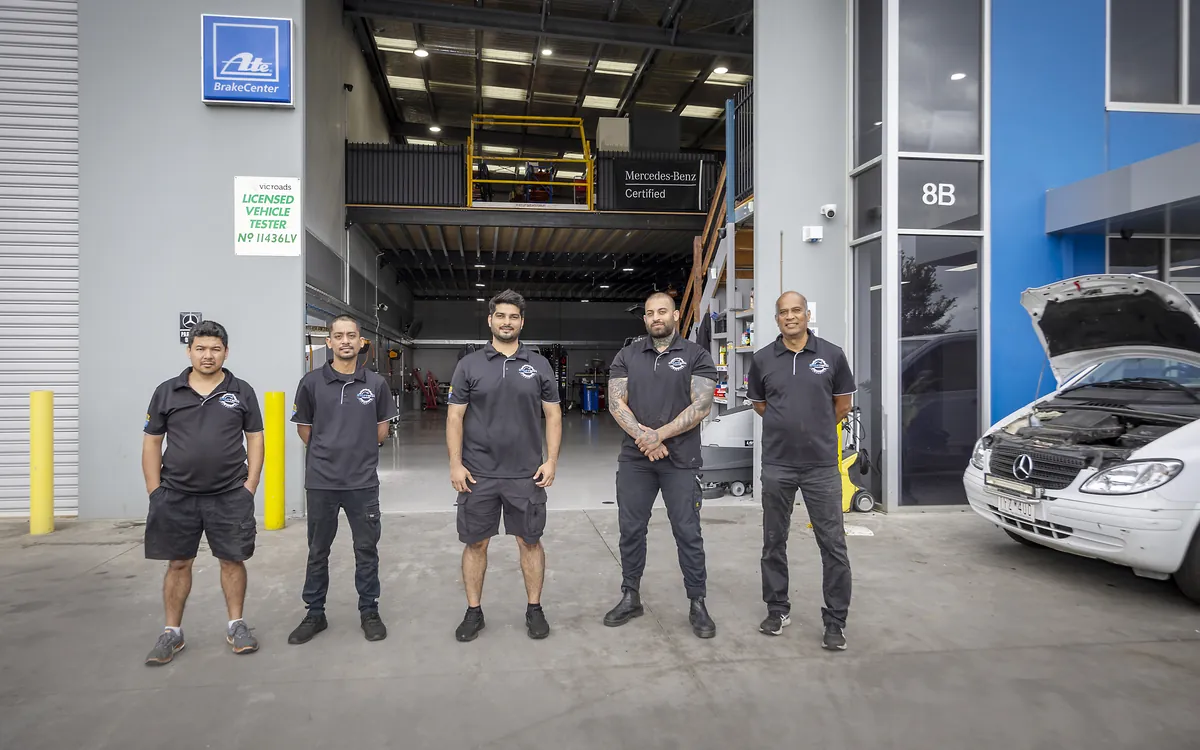
Patrick, Leon & the StarTech Prestige team
A father-and-son workshop — founded by Patrick (40+ years in the trade) and run by his son Leon, servicing Mercedes-Benz and European cars in Cranbourne West for 22+ years. StarTech Prestige is RACV Approved, VACC A-Grade and ARCtick licensed — rated 4.7★ from 177 Google reviews, the highest in the area.
DSG Transmission Problems: Symptoms, Causes & Fixes — FAQ
Jerky low-speed shifts, shuddering on take-off, a gearbox warning light or limp mode, and unusual noises. Many of these trace back to overdue fluid or a mechatronic-unit fault.
Most wet-clutch DSGs need a fluid and filter change periodically – commonly around every 60,000 km. Skipping it is the leading cause of premature DSG wear, so it’s worth confirming your car’s interval.
Often repaired. A fluid service, mechatronic repair/reset or clutch replacement fixes many DSGs without renewing the whole gearbox. We diagnose first and only recommend replacement when it’s genuinely needed.
Yes – DSG fluid services and mechatronic diagnostics are a specialty. We identify your exact transmission and treat it correctly.
Skip the quote queue — just book.
Fixed written pricing, RACV-accredited and warranty-safe. Pick a time that suits you and you’re done — trusted by 177+ Cranbourne West drivers.
Talk to a real mechanic
No waiting on quotes — lock in your spot in 60 seconds. Fixed written pricing confirmed before any work.
Book Online →Call 03 8782 07118B Universal Way, Cranbourne West VIC 3977 · Mon-Fri 8:30am-5:30pm
Questions about your car?
Talk to a real Cranbourne West mechanic. Call 03 8782 0711 or book online.