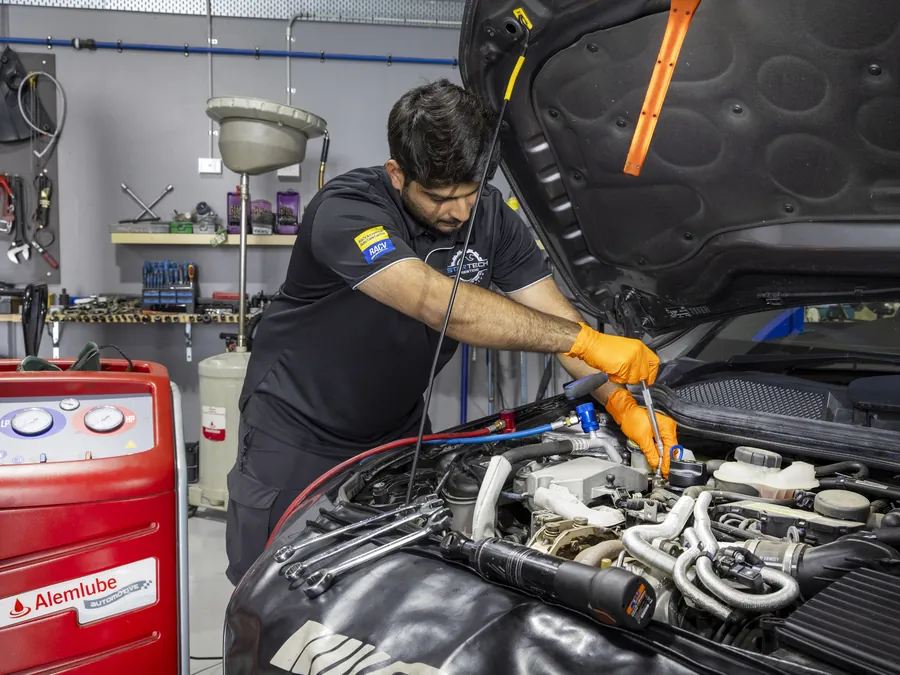
How to Check Your Coolant Hoses (The Squeeze Test)
Hoses fail from the inside — but your hand can read them from outside. A Cranbourne West specialist explains.
The squeeze test (engine COLD)
With the engine stone cold, squeeze the big radiator hoses and what you can safely reach: healthy hose feels firm and springy. Crunchy or brittle means it’s ageing; squishy-soft or gummy means the inside is breaking down; a hose that’s ballooned near a clamp is telling you where it will burst. Check clamp areas for the white/green crust of a seeping joint.
Never do any of this warm — the system is pressurised and scalding.
Why hoses deserve the attention
A burst hose dumps coolant in seconds and cooks the engine before the gauge finishes rising — and hoses age invisibly on schedule-free service lives. On European cars the plastic fittings the hoses clamp to grow brittle on the same timeline.
We squeeze-test hoses at every service and replace on condition — a hose costs little; the engine it protects doesn’t.
We’ll take care of it
Prefer to leave it to a specialist? We look after all of this as part of a service or a quick check — with honest advice on what your car actually needs, not what sells.
Book online in 60 seconds or call a Cranbourne West specialist on 03 8782 0711.
How to Check Your Coolant Hoses (The Squeeze Test) — FAQ
Engine cold: squeeze them — firm and springy is healthy; crunchy, squishy or ballooned is ageing out. Look for crust at clamps.
Warm systems are pressurised with scalding coolant — cold is the only safe time.
Coolant gone in seconds and an engine cooking before you can react — hoses are cheap insurance.
On European cars especially — they turn brittle with the hoses. We check both.
Related guides & services
More guides like this
Want it done properly?
Book your car in online in 60 seconds — RACV-accredited, fixed written pricing, no surprises. Or call 03 8782 0711.