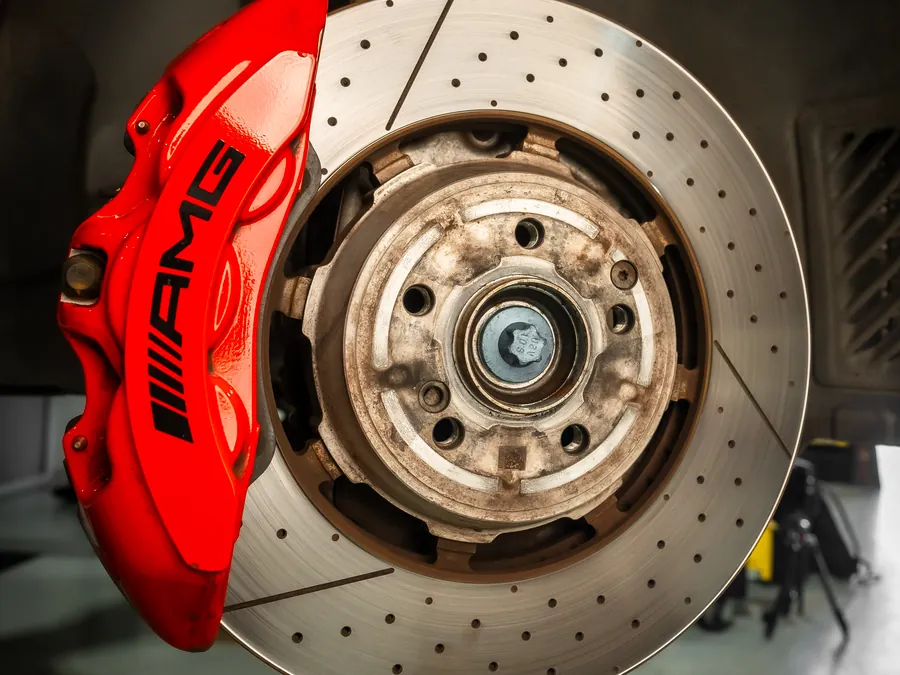
How to Bed In New Brake Pads and Discs
The first 200 kilometres decide how new brakes behave for their whole life. A Cranbourne West brake specialist explains.
Why bedding-in matters
New pads and discs need a controlled transfer layer of pad material onto the disc face — that layer is what actually does the braking. Bed them gently and evenly and you get quiet, smooth, strong brakes; abuse them hot in the first days and you can imprint uneven deposits that feel exactly like “warped discs” forever after.
Most brake shudder complaints on newish brakes trace back to a missed bed-in, not bad parts.
The simple procedure
For the first 200 km: brake normally but avoid two things — standing hard on them from high speed, and holding the pedal clamped when stopped after a heavy stop (roll forward a car length instead, so the hot pad doesn’t print on one spot). A series of moderate stops from 60–80 km/h with cooling gaps in between helps the layer form evenly.
We bed every brake job in on the road before handover — then the gentle-200-km rule finishes what we started.
We’ll take care of it
Prefer to leave it to a specialist? We look after all of this as part of a service or a quick check — with honest advice on what your car actually needs, not what sells.
Book online in 60 seconds or call a Cranbourne West specialist on 03 8782 0711.
How to Bed In New Brake Pads and Discs — FAQ
A pad-material transfer layer must form evenly on the discs — it’s what braking actually uses. Done wrong, deposits imprint and shudder forever.
Hard high-speed stops, and holding the pedal clamped when stationary after a heavy stop — the hot pad prints on the disc.
Roughly the first 200 km of normal, moderate braking with no abuse.
Often it’s uneven pad deposits from a missed bed-in, not warping — sometimes recoverable. We assess which.
Related guides & services
More guides like this
Want it done properly?
Book your car in online in 60 seconds — RACV-accredited, fixed written pricing, no surprises. Or call 03 8782 0711.