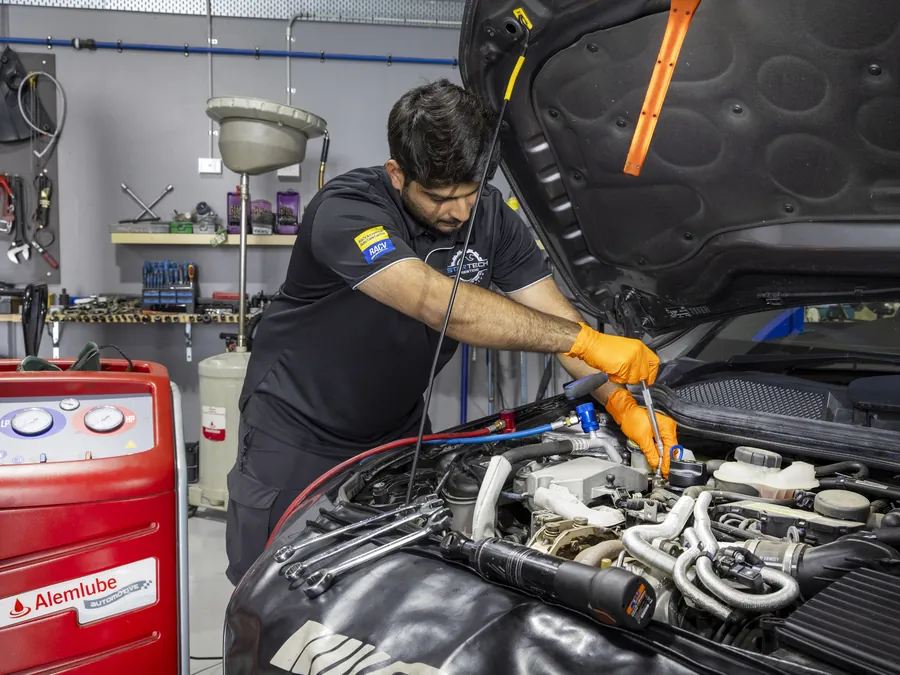
What Is Direct Injection (and Why the Carbon Build-Up)?
Direct injection makes modern engines efficient — but causes carbon build-up. A Cranbourne West specialist explains.
Want the fault found properly? Book a $374 prepaid diagnostic in Cranbourne West
What it is & what it does
Direct injection (GDI/TFSI/TSI etc) sprays fuel straight into the cylinder for better power and economy. The downside on many of these engines: because fuel no longer washes over the intake valves, carbon deposits build up on them over time, restricting airflow.
It’s especially common on European turbo-petrol engines and is a normal part of owning one.
Signs of trouble & how we help
Carbon build-up causes rough idle, hesitation, misfires, power loss and poor economy — usually after higher kilometres. A fuel-additive in the tank can’t reach the intake valves; the real fix is a physical clean (walnut blasting or equivalent).
We diagnose carbon-related symptoms and perform a proper intake clean — restoring how the engine runs.
Questions about your car? Just ask.
Understanding what’s under the bonnet makes servicing decisions easier — and we’re always happy to explain what your car needs and why, in plain English.
Book a service or a check with a Cranbourne West specialist online in 60 seconds, or call 03 8782 0711.
What Is Direct Injection (and Why the Carbon Build-Up)? — FAQ
It sprays fuel directly into the cylinder for better power and economy — common on modern turbo-petrol engines.
Fuel no longer washes the intake valves, so carbon deposits form on them, restricting airflow.
No — they can’t reach the intake valves. A physical clean (walnut blasting) is the real fix.
Rough idle, hesitation, misfires, power loss and poor economy, usually at higher km.
Related guides & services
More guides like this
Need yours checked?
Book your car in online in 60 seconds — RACV-accredited, fixed written pricing, no surprises. Or call 03 8782 0711.
Book it in
Pick a day below and we’ll confirm your exact time by SMS. Fixed written pricing before any work.